A Miami to Bahamas yacht charter sounds simple: step onto the yacht in South Florida, cross the Gulf Stream, and wake up in blue Bahamian water.
Sometimes that works. But only for the right route.
The honest answer is this: Miami or Fort Lauderdale to Bimini can make sense. Miami or Fort Lauderdale to Nassau, the Exumas, or the Abacos usually does not make sense for a luxury charter unless the crossing itself is the point.
Quick Answer
- Miami to Bimini: realistic on the right yacht and weather window.
- Miami to Nassau: possible, but it eats time and fuel.
- Miami to the Exumas: usually not the best way to start.
- Miami to the Abacos: possible on paper, often awkward in practice.
- Best broker advice: fly to the Bahamas and start the yacht where the charter actually begins.
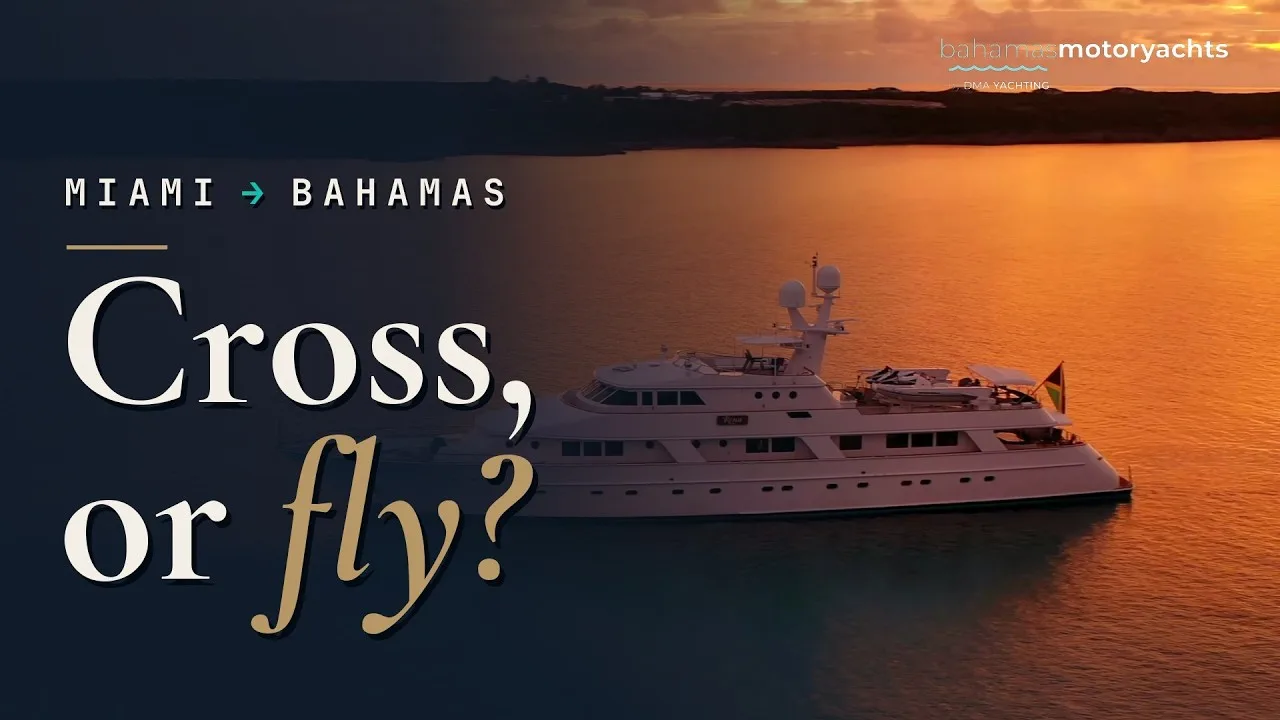

Example 1: Miami to Bimini
This is the cleanest version of the idea. Bimini is roughly 50 nautical miles from Miami, so a fast motor yacht can cross in a few hours in good conditions. It is still a real open-water crossing, but it is short enough to make sense for the right group.
A Bimini-focused charter can work well for guests who want the novelty of leaving Florida by yacht, clearing into the Bahamas, and spending a short trip around Bimini, Cat Cay, or nearby islands.
What it is not: the full Exumas experience. Bimini is beautiful, but it is not the same as starting in Nassau or Staniel Cay and spending your week in the Exumas.
Example 2: Miami or Fort Lauderdale to Nassau
Nassau is much farther. From South Florida, you are no longer talking about a quick hop. You are talking about a serious passage that can take a full day or more depending on the yacht, routing, clearance, and weather.
That time comes out of your charter. You are paying for the yacht while using a large part of the first day to get to the Bahamas rather than already being in the cruising grounds.
For most luxury charters, it is cleaner to fly to Nassau, board there, provision properly, clear the paperwork, and start the yacht trip already positioned for the Exumas.
Example 3: Miami to the Exumas
This is where the dream and the practical answer split apart.
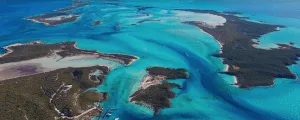
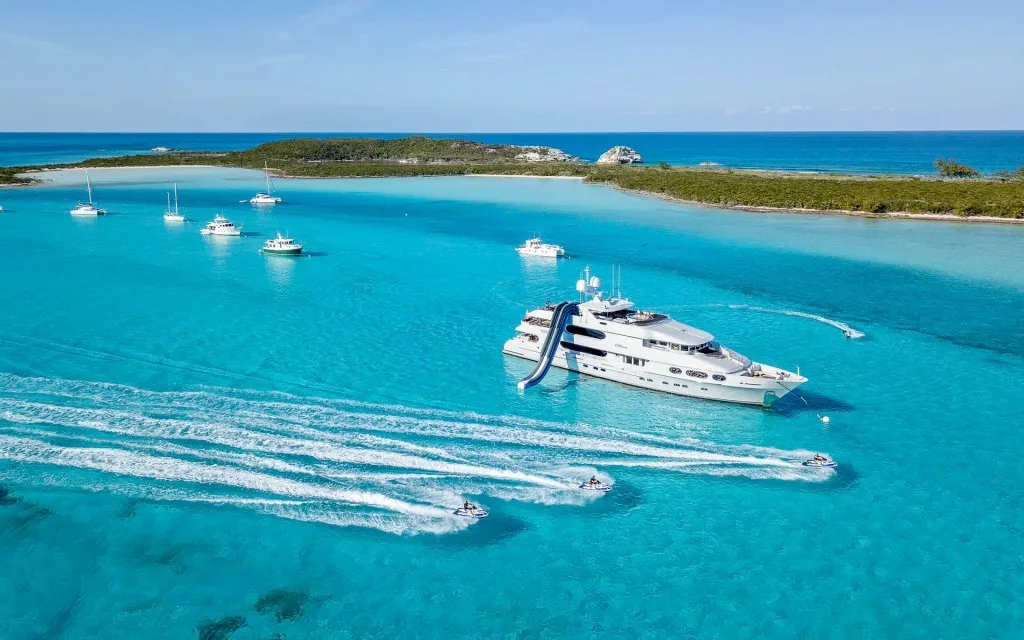
The classic Exumas route usually starts from Nassau, Staniel Cay, or another Bahamas pickup point. From there, you are already close to Highbourne Cay, Shroud Cay, Warderick Wells, Compass Cay, Staniel Cay, Thunderball Grotto, and the sandbars people actually came to see.
If you start in Miami, you first have to spend time getting across to the Bahamas and then continue deeper into the island chain. That can mean more fuel, more exposure to weather, less time swimming, and less time at anchor.
For the Exumas, we would normally recommend: fly to Nassau or Staniel Cay, then start the yacht there. If your dates are fixed by the school calendar, our Bahamas spring break guide explains why those March weeks book like Christmas.
The Gulf Stream Is the Real Decider
The Gulf Stream is not just a line on a chart. It is a strong north-flowing current between Florida and the Bahamas. When wind and current line up badly, the crossing can become uncomfortable quickly.
The key issue is north wind. Wind with a northerly component can push against the Gulf Stream and build steep, unpleasant seas. That is why captains wait for a proper weather window instead of promising a fixed departure no matter what.
This matters for charter guests because flights, weddings, villa bookings, and return plans often depend on timing. A yacht crossing that is delayed by 1 or 2 days can break the whole plan.
Broker insight
It's nothing to do with the APA or the money. It's the Gulf Stream, which can be brutal, and customs: you're leaving one country and entering another on a boat, and that means real delays. For a one-month charter, no problem.
 John Boullin
Charter Broker
John Boullin
Charter Broker
The Cost Problem
Fuel is the other reality. A fast motor yacht crossing from Florida to the Bahamas can burn a lot of fuel before the vacation has properly started.
For example, in one broker discussion around a Fort Lauderdale-to-Abacos-style request, the fuel was estimated at roughly $6,000-$8,000 at best for the transfer portion. That is before you solve comfort, timing, customs, or whether the yacht even wants to take the itinerary.
On a plus-expenses charter, that fuel usually affects the APA. On a shorter charter, it can be especially painful because you are spending a large part of the budget on transit rather than the charter experience.
Broker insight
When we booked LANIDA for a full week, there was no relocation fee from Florida. Fees like that aren't always fixed, the yacht and the length of the booking make the difference.
 Chris de Kock
Charter Broker, Sales Broker, Active CYBA Member
Chris de Kock
Charter Broker, Sales Broker, Active CYBA Member
Customs and Clearance
When entering the Bahamas by yacht, the vessel must clear Customs and Immigration at a designated port of entry. Until clearance is complete, guests do not simply step off and start exploring. The captain handles the formalities first.
That is normal, but it is another reason the route needs planning. Bimini can be straightforward because it is a common first port of entry. If your real charter is in the Exumas or Abacos, clearance and positioning should be part of the plan from the beginning.
Better Alternatives
For most clients, the better plan is simple:
- For Bimini: start in Miami or Fort Lauderdale if the yacht, weather, and minimum nights work.
- For the Exumas: fly to Nassau or Staniel Cay and board closer to the route.
- For the Abacos: fly to Marsh Harbour and start locally.
- For Grand Bahama: consider Freeport or West End if the yacht is positioned there.
There are also useful flight options into the Out Islands, including Fort Lauderdale Executive to Staniel Cay on scheduled services. For many groups, that saves a full day and gives a better yacht charter.
Who Should Start in Florida?
Starting in Florida can make sense if:
- You specifically want the Miami-to-Bimini crossing.
- Your group is flexible on departure timing.
- You are booking a fast motor yacht suited to the route.
- You understand the crossing may be delayed or uncomfortable.
- The crossing is part of the adventure, not just transport.
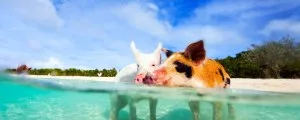
If your real goal is the Exumas, family beach days, swimming pigs, Thunderball Grotto, Shroud Cay, or a polished luxury charter, start in the Bahamas. You will usually get a better trip.
Broker Take
We would sell Miami to Bimini when the client actually wants Bimini and understands the Gulf Stream. We would be much more careful with Miami to Nassau, Exumas, or Abacos.
For most Bahamas yacht charters, the smarter expert recommendation is: fly into the best Bahamas pickup point, board a yacht that is already positioned well, and spend the charter enjoying the islands instead of paying to get there.






 iMessage
 WhatsApp