Yes, you can charter the Bahamas safely during hurricane season, and our brokers book June through November every year. Every booking in these months carries a hurricane addendum: if a named storm affects your dates, you reschedule or receive a credit, and you do not lose your charter fee. Even in September, historically the most active month, the chance of a hurricane passing within 100 miles of the northern Bahamas is about 8 percent.
- The season runs June 1 to November 30, but most activity concentrates between mid-August and mid-October
- The National Hurricane Center flags developing systems up to 7 days out, so no storm surprises a charter captain
- The hurricane addendum turns a disrupted week into a reschedule or a credit, not a lost fee
- Buy trip insurance when you book, not once a storm has a name
You have the dates you want, and a season label is making you hesitate. That is a completely normal question, and it has a concrete answer. Here is how the season actually works on a crewed charter, from the odds to the paperwork to the weeks we would happily book tomorrow.
What Hurricane Season Actually Means in the Bahamas
The Atlantic hurricane season officially runs June 1 to November 30. Within that six-month window, NOAA’s National Hurricane Center climatology shows the bulk of activity concentrates between mid-August and mid-October, peaking around September 10. So the realistic watch window is about 2 months, not half the year. If you are still choosing between months, our month-by-month guide to the best time for a Bahamas charter covers that decision; this article is about how the season works once you are looking at summer or fall dates.
One thing our brokers correct constantly: the Bahamas gets lumped in with Caribbean hurricane coverage, and it should not be.
Broker insight
The Bahamas is not in the Caribbean. It's well north and has different weather. A storm you see on the news in the eastern Caribbean is often a thousand miles from Nassau, so it usually says nothing about your week here. If a forecast ever worries you, send it to us and we will tell you straight what it means for your dates.
 John Boullin
Charter Broker
John Boullin
Charter Broker
That distinction matters in practice. The Bahamas sits a few hundred miles off Florida, on a different weather track from the Windward and Leeward islands, and its charter calendar reflects it. While much of the Caribbean fleet migrates away for the summer, Nassau keeps a working charter fleet year-round.
In lived terms, a June or September week in the Exumas looks like normal summer boating: warm water, afternoon showers that pass through, and the occasional system your captain is watching on a forecast several days out. It is not a five-month storm. Most weeks in the season, nothing tropical is anywhere near the Bahamas at all.
The Real Odds of a Storm Meeting Your Charter Week
Long-term NOAA-derived climatology puts numbers on this, and the numbers are calmer than the season’s reputation. In June and July, the historical chance of a named storm coming within 100 miles of the Bahamas is about 2 percent for the entire month. In September, the most active month, the odds for the northern Bahamas are about 16 percent for a named storm, 8 percent for a hurricane, and 3 percent for a major hurricane. The southeastern islands run lower still, at roughly 10, 6, and 1 percent. And those are month-long, whole-region odds: the chance for any single charter week is lower again.
For context, an average Atlantic season produces 14 named storms and 7 hurricanes across the entire basin, from West Africa to Texas. Most of them never come anywhere near the Bahamas.
Geography spreads the remaining risk further. The same September climatology shows the north-south gradient: roughly 16 percent named-storm odds near the northern islands against about 10 percent in the southeast. Hurricane Dorian in 2019 fit that pattern, hitting Abaco and Grand Bahama while Nassau and the Exumas were largely spared. We treat that gradient as an average, not a shield: your captain plans off the actual forecast, never off climatology.
The operational hinge is lead time. The National Hurricane Center flags areas with development potential up to 7 days out, and once a storm forms it publishes a five-day track forecast updated every 6 hours. The track firms up in the final 2 to 3 days. Nothing tropical arrives unannounced, which is why every decision in the next section gets made early and calmly.
And our own record backs the math: in our booking history, we have not had a Bahamas charter hit or cancelled by a hurricane.
How Our Brokers and Captains Run June Through November
The process starts at the contract, not at the dock. For every June through November booking, your broker adds the hurricane addendum before you sign. Whether a specific yacht takes summer and fall bookings is an owner-by-owner call, and your broker knows which boats do; once the right boat is matched, the paperwork question has a simple answer.
Broker insight
We can proceed at all times, we just need the hurricane addendum or clause. It is one page, and it settles the money question before you board: what happens to your payment if a named storm interferes with your week. Sign it early and there is nothing to negotiate later, because the answer is already in writing while the sun is still out.
 Daniel Asmus
Owner, Charter Broker, Active CYBA Member, IYBA, ECPY
Daniel Asmus
Owner, Charter Broker, Active CYBA Member, IYBA, ECPY
From there, weather management is the captain’s routine job. Bahamas captains watch the National Hurricane Center outlook the same way they check tide tables. With a seven-day heads-up on anything developing, decisions about routing get made days in advance, not in a scramble.
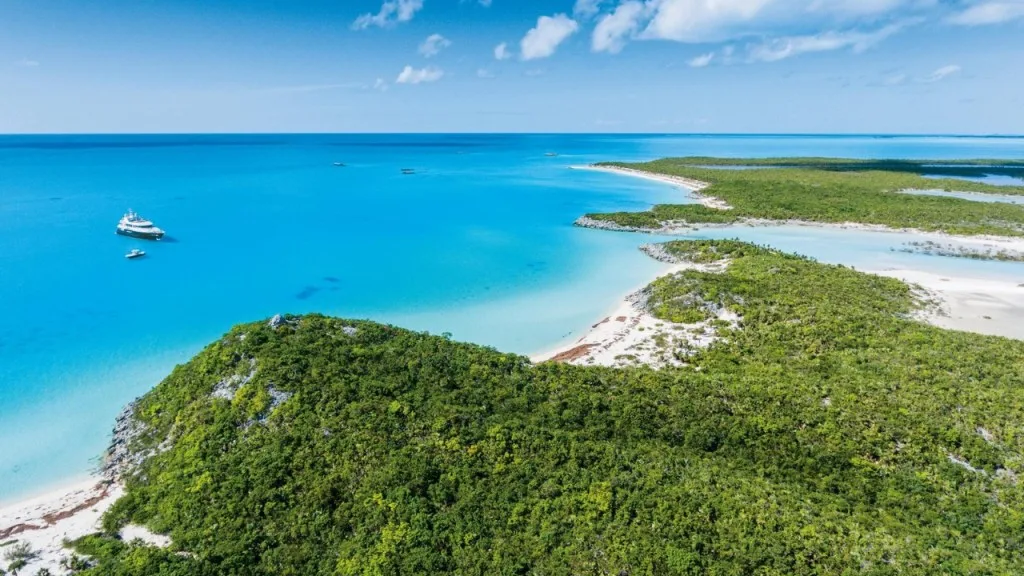
That is where a crewed yacht beats every land-based option in this season. A charter is not a hotel bolted to one island. The Bahamas archipelago stretches more than 500 miles, and your captain can shift the route toward the better weather. A weather day on a crewed yacht is rarely a lost day; it is a different anchorage, often one you would not have picked yourself and end up preferring.
2 operational details from our brokers’ summer practice show how this works:
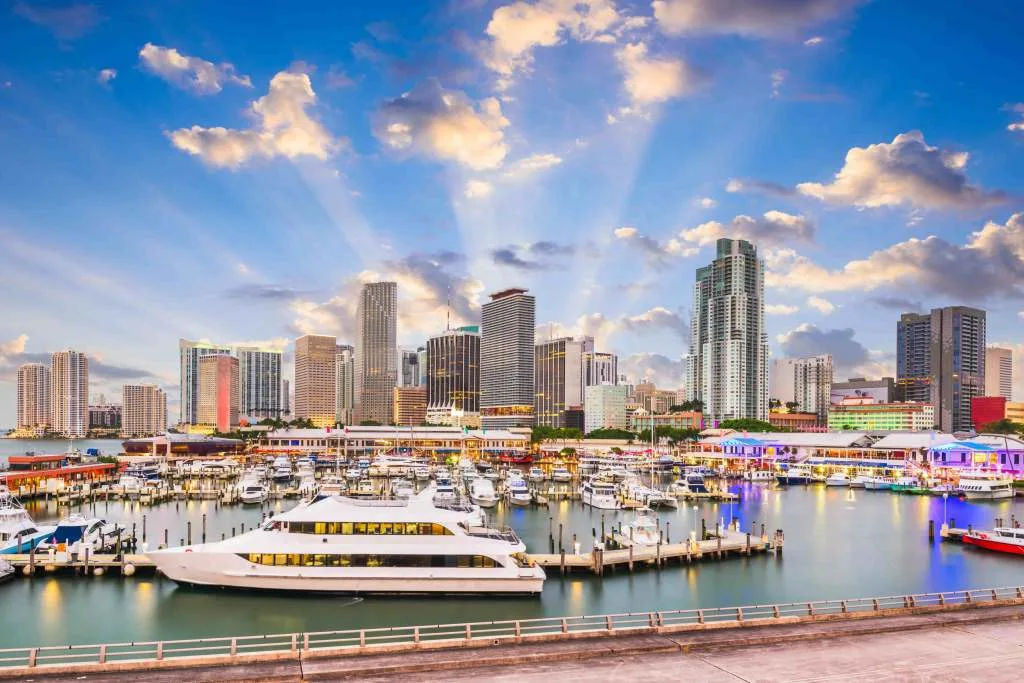
- Florida crossings get a weather window. When a charter starts with a Miami to Nassau crossing, our captains will move the crossing a day earlier or later to catch settled conditions. The itinerary flexes; the trip happens.
- The summer fleet is a known quantity. Some yachts use late summer for yard periods, so the bookable fleet is smaller than in March. Some boats stay based in Nassau year-round. Your broker knows which is which, so you are choosing from yachts genuinely set up to run these months.
The Paperwork: Addendum, Insurance, and Rebooking
One addendum, one insurance decision, and a rebooking practice remove essentially all of the financial risk. Here is the stack, in the order it happens.
The hurricane addendum
The addendum is a short attachment to your charter contract, added to every June through November Bahamas booking we make. Its job is simple: if a named storm affects your charter dates or area, you reschedule or receive a credit. The charter fee is not lost. Different contract forms build this protection in differently (MYBA uses a separate addendum, other contract families write it into the main agreement), and your broker matches the right version to your booking. For the condensed version, see the short version of our weather and hurricane policy.
One honest boundary: the addendum triggers on an actual named storm affecting your charter. It does not cover cancelling because a forecast made you nervous. For that, you want the next layer.
Trip insurance, and the one timing rule that matters
Buy trip insurance when you book, not when a storm shows up on the news. Once a storm has a name, insurers treat it as a known event, and new policies will not cover it. This single timing rule decides whether insurance protects you at all.
If you want maximum flexibility, Cancel For Any Reason coverage exists as an upgrade. It has to be purchased early, within roughly 14 to 21 days of your first deposit depending on the policy, and it reimburses a percentage of your prepaid costs even if you cancel purely because you changed your mind. Policies vary, so read the certificate; our cancellation insurance FAQ covers the basics. Most guests skip insurance entirely. For summer and fall Bahamas dates, we think that is a mistake, and we say so at booking.
If a storm does affect your dates
In the rare case a storm does intersect a booking, our first move is always to reschedule, because that preserves the full value of your charter. Refund outcomes depend on whether the yacht can rebook the week, which is exactly why we push the reschedule route first.
What that looks like with real people involved: when a force majeure event (not a storm) knocked out the boat on one of our Bahamas bookings, the owner moved the guests onto a replacement yacht with an immediate discount, waived the relocation fee, and the captain got on a video call with the guests and brokers to rebuild the trip together. The same machinery is what would carry a weather-disrupted week: the paperwork sets the rules, and the people in this industry generally go beyond them.
The Upside: Why Summer and Shoulder Weeks Are Worth Considering
Bahamas charter rates stay level year-round, so we will not pretend the season is a discount play; here is why Bahamas charter rates stay level year-round. The season’s real advantage is choice and conditions.
June and July are the overlooked sweet spot. The historical storm odds sit around 2 percent for the whole month, the water is warm and settled, and in our experience the mid-March through August stretch is prime Bahamas time. School holidays line up, the Exumas sandbars are at their best, and you are booking with barely more weather risk than a spring week.
Early November is the quiet finish. The season is winding down on the calendar, and our brokers book successful charters in the first 2 weeks of November year after year. If your dates are flexible at the edges of the season, these weeks combine easing odds with a fleet that is back from yard work.
On budget, the season changes nothing: crewed catamarans start around $40,000 a week and motor yachts around $60,000, with most of our clients chartering in the $60,000 to $200,000 range. The full Bahamas charter cost guide breaks down what sits inside those numbers.
When We Would Actually Tell You to Wait
We book these months with confidence, but honestly, there are 3 situations where we would counsel patience:
- A named system is already on the forecast inside your travel window and you have not signed yet. Wait the 2 to 3 days it takes for the track to firm up before locking dates or flights. The forecast will tell you more on Thursday than it can on Monday.
- Your date absolutely cannot move and you refuse insurance. A wedding week or a one-shot family window with no coverage is the one setup where the season’s small odds carry real weight. The fix is cheap relative to the charter: buy the insurance, or shift to a spring window.
- You want a guarantee. No honest broker can promise weather. What we can promise is the process: addendum signed, insurance in place, a captain watching the forecast a week out, and a rebooking practice that protects your fee.
That stack, not optimism, is the reason we book the Bahamas straight through the season. Tell us your dates and we will tell you honestly what the season means for them, which boats are set up to run the summer, and how the addendum will read before you sign anything.











 iMessage
 WhatsApp