The best snorkeling in the Bahamas runs down the Exuma chain: Thunderball Grotto off Staniel Cay, the sunken drug plane at Norman’s Cay, and the no-take reefs of the Exuma Cays Land and Sea Park. This guide is written for one kind of trip: a crewed charter week, where your yacht anchors near each spot and the crew runs you in by tender at the right tide. If you are planning a cruise-ship excursion or a resort day trip, this is not that article.
You have seen these spots on Instagram. The real question is which ones deserve a slot in a seven-day route, and what your yacht and crew actually do to make each one work. Here is the short version:
- Thunderball Grotto is the headline stop, and it only works properly around low or slack tide. Your captain times it. You just show up.
- The Exuma Cays Land and Sea Park is a no-take zone with mooring rules and fees your crew handles before you ever hear about them.
- Most yachts in our fleet carry snorkel gear, so you do not pack fins or book excursions. Your broker confirms sets and sizes before you board.
- One week down the Exuma chain covers more good water than any land-based trip could reach.
How Snorkeling Works on a Crewed Yacht Charter
The pattern repeats at almost every spot in this guide. The yacht anchors in the lee of a cay or picks up a mooring, and the tender covers the last stretch, usually a ten to twenty minute run. Your crew checks conditions first, then brings you in when the water is right. That last part matters more than any spot list: the difference between a great snorkel and a frustrating one in the Bahamas is nearly always timing, and timing is exactly what a crew that sleeps next to the site can control.
Gear is simpler than most first-time charterers expect. Most crewed yachts in the Bahamas fleet carry snorkel gear for guests, and your broker confirms sets and sizes, including kids’ fins and masks, before you board. Nobody is renting equipment off a beach stand mid-charter.
Diving is a different question from snorkeling, and it is worth settling before you pick a yacht. Our fleet splits three ways:
- Some yachts carry full scuba setups with an onboard compressor and dive-qualified crew, so certified divers can dive straight off the boat all week.
- A few carry surface-supply hookah systems, which let you breathe below the surface without tanks or certification.
- The rest offer rendezvous diving only, meaning a local dive shop meets the yacht.
That last option is the catch. Dive shops are thin on the ground down the Exumas, and PADI’s directory lists barely any operators in the chain. Rendezvous diving is easy to arrange around Nassau and hard to arrange mid-Exumas. Our advice is simple: if anyone in your group is a certified diver, pick the yacht for the compressor. Snorkelers can pick any yacht. Our page on yachts with scuba diving on board lists the boats that carry their own gear.
Snorkeling is also only one of the five water activities your crew can run on a typical day, so a snorkel-heavy week still leaves room for everything else.
A few yachts we book make the point concretely:
- AMMONITE (77 ft Nordhavn): Nitrox compressor on board, scuba gear for up to 5 divers, snorkel gear, and two SEABOBs. The strongest single example of a yacht that never needs a dive shop.
- SO WHAT WHO CARES (94 ft Sunseeker): full scuba gear for 8 guests with an onboard compressor, and Captain Rodney, a dive master, leads the dives himself. The whole group goes down together.
- UNBRIDLED (116 ft Crescent): snorkel gear, a dedicated mate and dive instructor, James Miller, who ran scuba charters in the Exumas for five years, and a towable 32 ft Boston Whaler tender built for exactly the site runs this article describes.
Thunderball Grotto and the Staniel Cay Hub
Thunderball Grotto is the best-known snorkel site in the Bahamas, and it earns it. The grotto is a hollowed-out marine cave just west of Staniel Cay, named for the 1965 Bond film shot inside it, with chambers partly open to the sky so shafts of light drop straight onto the fish below you.
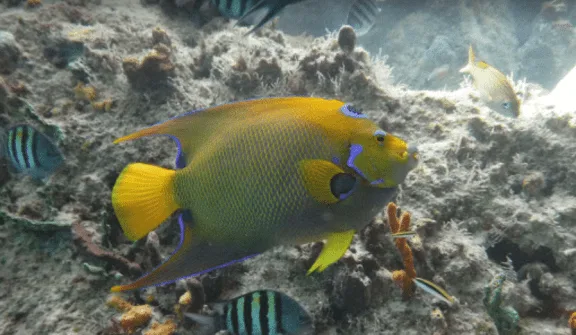
Yellowtail snappers, sergeant majors, and angelfish crowd the interior because visitors have fed them for decades. It also appeared in Never Say Never Again, Splash, and Into the Blue, which is why every day boat in the Exumas wants to be there at noon.
Timing the Tide at Thunderball Grotto
The catch is tide. The entrances sit low in the rock, and the current through them is strong when the tide is running:
- Enter at low or slack tide. That is the official advice, and it is ours too: you swim in with easy headroom and no current fighting you.
- At higher water the entrance becomes a short duck-dive, fine for confident swimmers, not for everyone.
- The calm window around slack is short, well under an hour, which is exactly why your crew times the tender run for you.
- The crew brings flotation vests for anyone who wants one, and guides the group in and out.
This is where the yacht advantage is the entire story. Day-tour boats leave Staniel mid-morning and hit the grotto at whatever tide they get. A charter yacht anchored off Big Major spends the night next door and takes the first slack of the morning, before the tour fleet is even loading. Same grotto, completely different experience. Unlike the park sites further north, there is no fee here; the grotto sits outside the Land and Sea Park boundary.
Staniel Cay is the hub of the week, and the same anchorage feeds three more stops by tender:
- Compass Cay: the private marina is famous for its docile, well-habituated nurse sharks, which gather around the dock in standing-depth water. The marina charges a small per-person landing fee, paid in cash, and your crew calls ahead and handles it.
- Sampson Cay, just south: an at-anchor stop. The island itself is private, but the sandbars that surface at low tide are open to anyone on a boat, and they make the easiest swim-and-champagne stop of the week.
- Big Major Cay: the swimming pigs are a five-minute tender ride away, though that is a beach visit, not a snorkel.
For the full picture of the area, including the pigs, see our full Staniel Cay guide.

Norman’s Cay and the Exuma Cays Land and Sea Park
The run between Nassau and Staniel Cay holds the middle days of the week, and two very different stops.
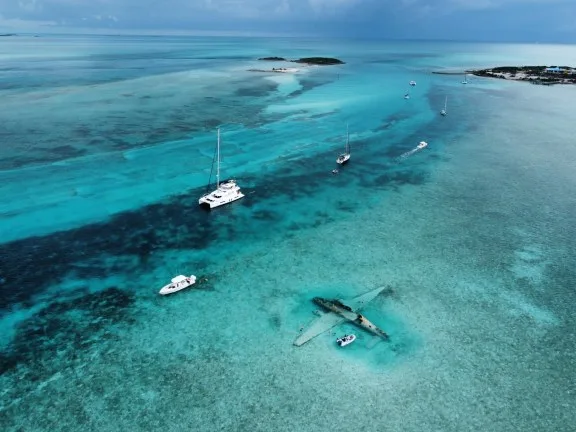
Norman’s Cay, near the top of the chain, has the most photographed wreck in the Bahamas: a twin-prop plane resting in roughly six to ten feet of water, depending on tide, easy for first-time snorkelers.
The internet calls it Pablo Escobar’s plane. It is not. The aircraft is a Curtiss C-46 Commando that crashed in 1980 during Carlos Lehder’s smuggling operation, which ran Norman’s Cay in the late seventies and early eighties.
The history is grim and the snorkeling is wonderful: the wreck sits on a shallow, sheltered bank a short tender run from the anchorage, and because Norman’s Cay is one of the first stops after Nassau, it makes a natural first-full-day snorkel.
Broker insight
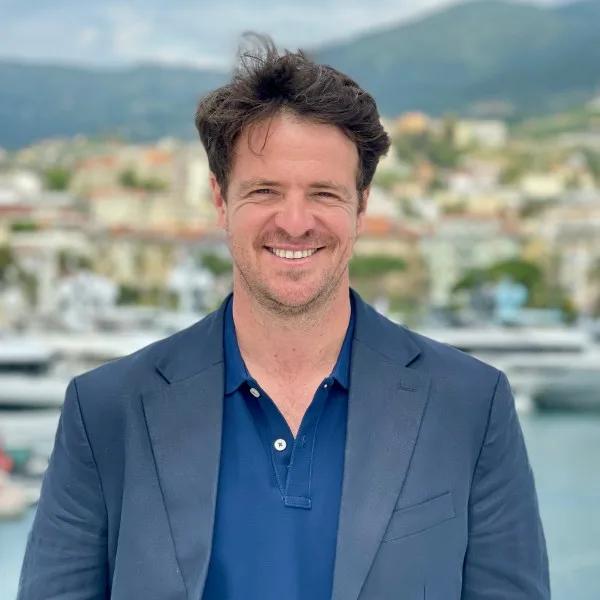
Norman's Cay is an incredible spot for snorkeling. The plane wreck sits in water so shallow you can see it from the tender before you even get in, and since it is one of the first stops south of Nassau, I like to put it early in the week. It gets everyone comfortable in the water before the bigger days further down the chain.
 Louis Lamprell
Charter Broker, Active CYBA Member
Louis Lamprell
Charter Broker, Active CYBA Member
Just south of Norman’s Cay you cross Wax Cay Cut and enter the Exuma Cays Land and Sea Park, and the water changes. The park was established in 1958 as the first land-and-sea park in the world, covers 176 square miles, and has been a full no-take marine reserve since 1986.
Decades of protection are why the reefs here hold fish densities you will not see anywhere else in the Bahamas. The headline snorkel is the Sea Aquarium off O’Brien’s Cay, a shallow reef in the ten to fifteen foot range near the Cambridge Cay mooring field, reached by tender.
Park headquarters sits at Warderick Wells, whose mooring field wraps around a sandbar so photogenic it has become the park’s postcard.
The rules are the value here, and your crew has done this fifty times, so none of it lands on you. What they are handling in the background:
- Mooring fees run roughly $30 to $190 a night depending on yacht length, VAT included, plus a small per-guest daily fee on charter yachts.
- Yachts that anchor instead pay a modest per-foot nightly rate.
- There are no advance reservations; Warderick Wells moorings are assigned by park staff over VHF channel 09, and the crew makes that call.
- Nothing living or dead comes out of the water, not even a shell. No fishing, no conching, no lobstering.
- Anchoring is banned on coral and in the mooring fields, which is why crews who know the park matter.
One practical note for anyone who loves to fish: the rods stay stowed inside the park, and come back out the moment you clear Conch Cut at the southern boundary. Thunderball and the Staniel hub sit outside the park, so the best fishing water and the best snorkeling water share the same week without conflict. To see where these days fall in a real route, our 7-day Exumas itinerary walks the full chain day by day.
Beyond the Exumas: Nassau Day One and the Long-Range Spots
Most charter weeks board in Nassau, and Rose Island is the day-one move we recommend. It sits northeast of Nassau, well under an hour from the dock, with easy, shallow reefs close to shore: turtles, rays, and reef fish over grass and coral heads. It is the warm-up snorkel. Everyone finds their mask fit and their confidence on day one, the crew learns who the strong swimmers are, and the yacht still makes the run south on schedule.
At the other end of the ambition scale sits Conception Island, and this is where a motor yacht changes what your week can be. Conception is an uninhabited Bahamas National Trust park, protected since 1978, about 30,000 acres of island and surrounding reef southeast of the Exumas near Rum Cay. Nobody has lived there in about a century.
The BNT maintains three moorings for larger vessels, green turtles forage in the interior creek, and the reefs around the island are as untouched as anything in the country. It is open-ocean, weather-window territory, so it belongs on a ten-day-plus itinerary or a faster motor yacht that can use a calm stretch when one appears.
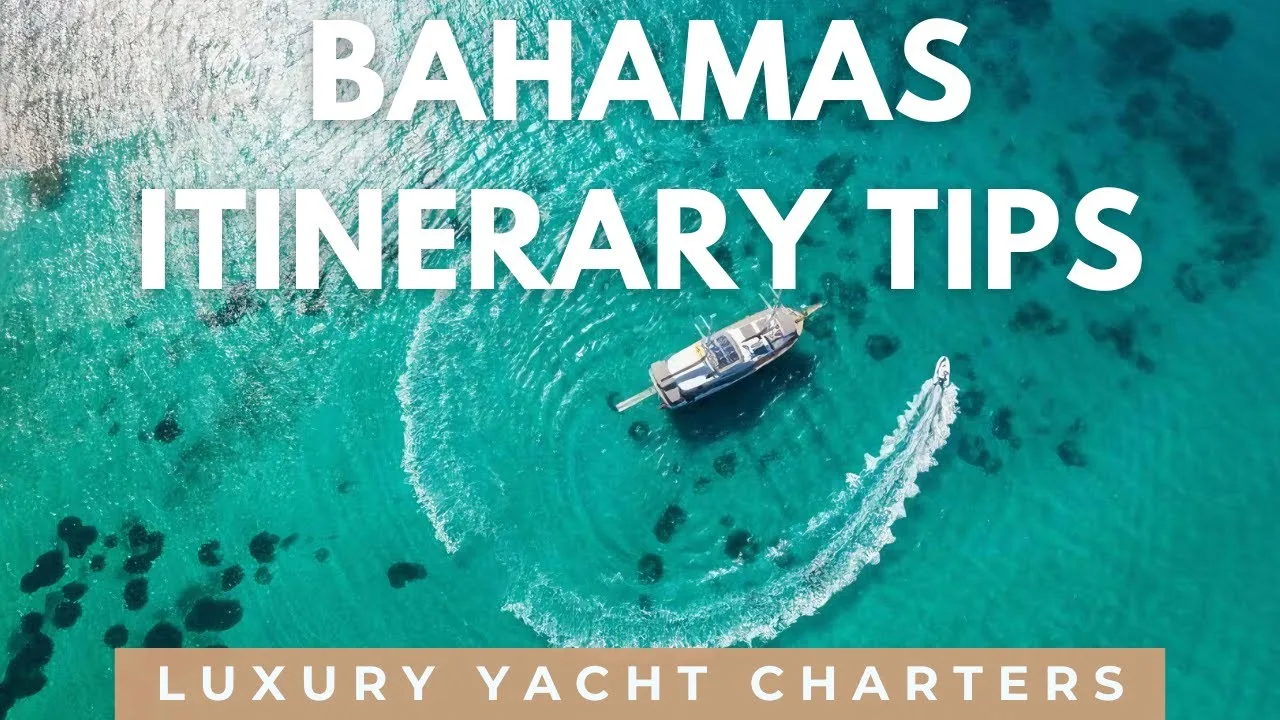
The proof is in the video below: a charter captain with around a hundred dives behind him calls Conception Island the best dive of his career. The snorkeling floats over those same reefs. If your dates allow ten days, this is the stop we would add first.
When to Snorkel the Bahamas
The honest answer is that the Bahamas is snorkelable all year. Water temperatures run from about 76 F in winter to about 85 F in summer, and winter and spring bring the clearest water, with visibility routinely topping 50 to 100 feet. Winter cold fronts can stir things up for a day or two, which is another argument for a crew that can simply reshuffle the route around a blow.
Summer brings the warmest water and the glassiest mornings, and the trade-off is storm-watch season. That is a route-planning question more than a snorkeling question, and our guide to what hurricane season actually means for a charter covers the mechanics. Which month to book is a bigger decision than snorkeling alone, and our best-time guide ranks the months properly, so we will not restate that here.
What to Ask Your Broker
Five questions shape a snorkel-heavy week more than any spot list:
- Does the yacht carry snorkel gear in our sizes, including children’s sizes and prescription masks?
- Is the crew set up for early, tide-timed tender runs, especially at Thunderball?
- Does the route plan cover the Land and Sea Park fees and mooring calls?
- Do we need a dive-capable yacht, or is snorkeling enough for this group?
- How many nights at the Staniel Cay hub, since that anchorage feeds three of the best stops?
Send us your snorkeling wish list and we will tell you straight which spots fit a week, which need ten days, and which yacht makes the route easy.